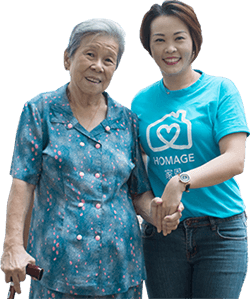


When someone you love is becoming more frail, knowing what kind of care they need can be one of the hardest decisions you face.
You want them to remain comfortable, feel safe, and spend as much time as possible in familiar surroundings. But as their needs change, you may start to wonder whether home care is still enough, or whether it’s time to consider hospice care.
The answer often becomes clearer as hospital stays become more frequent, everyday care grows more demanding, or conversations with the doctor begin to shift towards comfort and quality of life.
Understanding the difference between home care and hospice care can help you make a decision that best supports your loved one and your family.
Signs it may be time to talk about hospice care
Raise it with the doctor if several of these are true:
- Hospital admissions for the same illness are more frequent, with less recovery each time.
- Your loved one spends most of the day in bed or needs help with most daily activities.
- Treatment is no longer helping, or they have decided they no longer want it.
- Pain, breathlessness, nausea or agitation are getting harder to control.
- They are eating and drinking less, and losing weight despite support.
Moving to hospice care changes the goal of care. It does not mean care stops. Asking early simply gives everyone more choice.
How home care and hospice care differ
Both can happen at home. The goals and the people involved are different.
| Home care | Hospice care | |
|---|---|---|
| Main goal | Daily living, recovery and independence | Comfort, symptom relief and quality of life |
| Who it’s for | Anyone who needs help at home, at any stage | People with a life-limiting illness, usually in the last months of life |
| Care team | Caregivers, nurses and therapists | Palliative doctors, nurses, social workers and counsellors |
| Where it happens | At home | At home, in an inpatient hospice or in hospital |
| How to start | Book directly with a provider | Usually through a doctor’s referral |
| How often | From a few hours a week to daily | Periodic visits, sometimes with phone advice in between |
| Costs | Varies by provider and care type | Subsidised for eligible citizens and PRs, based on household means |
Home care covers bathing, toileting, meals, medication reminders and company, as well as nursing and therapy. It suits someone recovering from surgery just as well as someone living with a long-term condition.
Hospice care is palliative care for people approaching the end of life. Treatment shifts from curing the illness to easing pain and other symptoms, and to supporting the whole family.
Our guide to hospice care in Singapore lists the main providers and how to apply.
How much hospice care costs in Singapore
Home hospice care
Home visits from charity hospices are often free, paid for by government subsidies and donations. But the hospice team visits every few days or weeks.
Between those visits, someone still has to bathe your loved one, turn them in bed, give medicines on time and sit up with them through the night.
That’s where Homage comes in. Our palliative care Care Pros work alongside your hospice team and follow its care plan.
Caregivers start from $27.50 an hour. Our nurses handle tube feeding, wound care and catheter changes between hospice visits. You can book a few hours a week or round-the-clock care, and you’ll get a report in the Homage app after every visit.
The Home Caregiving Grant can offset the cost, with payouts of $200 to $600 a month.
Inpatient hospice: about $17 to $32 a day after MediShield Life
Inpatient hospice suits someone whose symptoms are too hard to manage at home. Here is one example.
At Ren Ci Hospital, a Singapore Citizen’s average daily bill for general palliative care is $166 to $318 before MediShield Life.
After MediShield Life, the balance is about $17 to $32 a day. MediSave can usually cover the rest, so the cash payment can be small or nothing.
The subsidy you get
MOH subsidies apply to inpatient hospice, home palliative care and day hospice.
| Monthly household income per person | Singapore Citizen | Permanent Resident |
|---|---|---|
| $2,100 and below | 80% | 50% |
| $2,101 to $3,000 | 65% to 75% | 32.5% to 42.5% |
| $3,001 to $3,600 | 55% to 60% | 27.5% to 30% |
| $3,601 and above | 50% | 25% |
Households with no income are assessed on the Annual Value of their home. Ask the hospital doctor, medical social worker or AIC to apply for you.
MediSave and MediShield Life limits
- MediShield Life pays up to $460 a day for general inpatient palliative care and $500 a day for specialised care.
- MediSave pays up to $250 a day for general inpatient palliative care and $350 a day for specialised care, with no lifetime cap. You can use family members’ MediSave too.
- Home palliative care and day hospice: there is no MediSave limit if your loved one uses their own account. Using a family member’s MediSave is capped at $2,500 per patient for life.
Other costs to plan for
Hospice nurses and doctors visit, but they don’t stay. These are the costs families usually meet in between.
| Cost | What it costs | Help available |
|---|---|---|
| A caregiver for bathing, meals and turning in bed | $27.50 to $28 an hour on weekdays with Homage | Home Caregiving Grant of $200 to $600 a month |
| Overnight care | About $285 for a 10-hour weeknight shift with Homage | Home Caregiving Grant |
| Nursing procedures, such as a catheter change | From $80 per procedure with Homage | MediSave, for some procedures |
| Hospital bed, commode, wheelchair | Varies by item | Seniors’ Mobility and Enabling Fund, up to 90% of the cost |
| Diapers, dressings, milk feeds | Varies | SMF home healthcare items, up to 80% for people aged 60+ on home palliative care |
Homage rates include GST and are correct at the time of writing. See our pricing page for every rate.
Example: one month of care at home
Mdm Tan has advanced lung cancer and wants to stay in her HDB flat in Tampines.
A charity home hospice team visits weekly, at no cost. Her daughter works, so the family books a Homage caregiver for about four hours every weekday morning.
That’s 80 hours a month, and our 80-hour package costs $1,920.
Her household income is about $2,000 per person, so she qualifies for a Home Caregiving Grant of $400 a month. Her hospital bed is bought with SMF support.
The family’s monthly cost: roughly $1,520 for care, plus consumables.
Not sure how many hours you’d need? An in-person care assessment will help you plan what your loved one needs.
How home hospice care works
- Ask for a referral. Ask your loved one’s hospital or polyclinic doctor to refer them. The medical social worker will fill in the forms and apply for subsidies with you. To see which hospices serve your area, read our guide to hospice care in Singapore.
- The hospice team visits. A hospice nurse or doctor comes to your home. They check your loved one’s pain and other symptoms, review their medicines, and ask who at home can help with daily care.
- You agree a care plan together. The plan sets out what matters most to your loved one, which medicines to give for symptoms, and how often the team will visit.
- The team keeps visiting. Nurses and doctors come back regularly to check on your loved one and adjust medicines. Some hospices also have a phone line you can call between visits.
- Arrange help for the hours in between. The hospice team doesn’t stay. A Homage Care Pro can follow the hospice’s care plan for bathing, meals, turning in bed and overnight care.
Using home care and hospice care together
Between hospice visits, someone still has to shower your loved one, turn them in bed every few hours, prepare soft food and sit up with them through a bad night.
A Homage Care Professional can do all of this, following the hospice team’s plan. Our palliative care and end-of-life care services work with your hospice team, not instead of it.
For wound care or tube feeding between visits, our home nursing team can help. For the nights, there’s night care.
Nora, a Homage Care Pro, puts the companionship side simply: “Caring for Uncle B, I feel satisfied and motivated, knowing I am able to cheer him and be someone he can confide in.”
Questions to ask before you decide
Ask the doctor:
- Is the goal now treatment, comfort, or both?
- Which hospice would you refer us to, and is its home care free?
Ask the hospice:
- What will we pay after subsidies?
- Are medicines, equipment and consumables included?
- Who do we call at 2am?
Ask your family:
- Where does Mum want to be cared for?
- Who will be the main caregiver, and how many hours of help will they need?
Looking after yourself
Book a few hours of respite care before you need it. Ask the hospice whether it offers counselling and bereavement support for the family.
If you are weighing up what your loved one needs next, our Care Advisors can talk it through with you, without pressure. Book a free consultation.
Frequently asked questions
What is the difference between hospice care and home care?
Home care helps with daily living, recovery and nursing at any stage of life, and you can book it directly. Hospice care is palliative care for people with a life-limiting illness, usually in the last months of life. It focuses on comfort and symptom relief, and it normally starts with a referral from a doctor.
When should someone consider hospice care?
Talk to the doctor about hospice care if treatment is no longer helping or wanted, your loved one keeps declining despite good care, or symptoms such as pain or breathlessness are getting harder to control. Starting earlier gives the hospice team more time to plan comfort care and support the family.
Is home hospice care free in Singapore?
Not always, but it is subsidised. MOH subsidises home palliative care for eligible Singapore Citizens and Permanent Residents. The subsidy depends on residency status and household means, and you apply through your doctor or AIC. Ask the hospice provider what you will pay after subsidies before care starts.
Can a caregiver help alongside the hospice team?
Yes. Hospice nurses and doctors visit periodically, but daily care still has to happen in between: bathing, turning in bed, meals and overnight support. A trained Care Professional can provide this care alongside your hospice team, following the plan they have set.
References
Show references
- Singapore Hospice Council. (n.d.). Hospice care services in Singapore. https://singaporehospice.org.sg/
- Ministry of Health Singapore. (2026). Subsidies for palliative care services. https://www.moh.gov.sg/managing-expenses/schemes-and-subsidies/subsidies-for-palliative-care-services/
- Agency for Integrated Care. (n.d.). Agency for Integrated Care. https://www.aic.sg/
- HealthHub. (n.d.). HealthHub. Ministry of Health Singapore. https://www.healthhub.sg/
- Living Matters. (n.d.). Advance Care Planning. Agency for Integrated Care. https://www.livingmatters.sg/