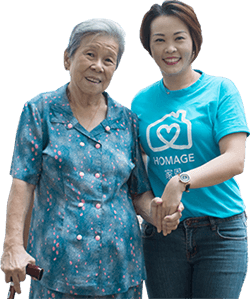
A healthcare assistant (HCA) in Singapore supports nurses and care teams with the daily care of patients and seniors. The role covers personal care, mobility, feeding, hygiene, escorting to appointments and reporting changes in condition. HCAs work in hospitals, nursing homes, senior care centres and private homes, always under the supervision of a nurse.
If you are thinking about a career in care, the healthcare assistant role is often the first door in. You do not need a medical degree, and in most cases you do not need prior healthcare experience.
What you do need is patience, a steady pair of hands and a genuine interest in people. Here is what the job actually involves in Singapore, where you can work, what you can earn and how to get started.
What is a healthcare assistant?
A healthcare assistant is a member of the care team who supports patients and seniors with the everyday tasks they can no longer manage on their own. You work under the direction of a registered or enrolled nurse, and you are usually the person spending the most time with the client.
One thing that trips up almost every job seeker: the same work is advertised under many different titles. Depending on the employer, you may see healthcare assistant, health care assistant, basic care assistant, nursing aide, patient care assistant, care associate or community care associate. At Homage, the equivalent role is called a Care Professional, or Care Pro.
The duties overlap heavily across these titles. What changes is the setting, the shift pattern and how much delegated clinical work you are trained to do.
If you are scanning job listings, read the job scope rather than the title. You can see how one provider describes the role on Homage’s caregiver jobs page.
What does a healthcare assistant do day to day?
Most of the job is what the sector calls activities of daily living, the basic tasks that keep a person clean, fed, safe and comfortable. A typical shift includes:
- Personal care and hygiene, including showering, toileting, oral care and changing continence products
- Feeding and meal assistance, and monitoring how much a client eats and drinks
- Mobility support, transfers between bed and chair, walking practice and repositioning to prevent bedsores
- Taking and recording vital signs such as temperature, blood pressure and pulse, where you have been trained to do so
- Escorting clients to medical appointments and helping them navigate the visit
- Companionship, conversation and simple engagement activities
- Light housekeeping in the client’s immediate care space, such as changing bed linen and tidying the room
- Observing and reporting any change in condition, mood or appetite to the nurse on duty
It is just as important to be clear about what the role does not cover. Healthcare assistants do not diagnose, do not prescribe and do not carry out clinical procedures independently.
Some tasks can be delegated to you by a nurse once you are trained and assessed, but the clinical responsibility stays with the nurse. If you are ever unsure whether something falls within your scope, the right move is always to ask.
A shift in a nursing home or senior care centre
Facility work runs on a roster, often in three rotating shifts including weekends and public holidays. You care for a group of residents rather than one person, working alongside nurses, therapists and other care associates.
The pace is steady and the routines are structured, which many people find reassuring when they are new to care work.
A home care visit
Home care is different. You visit one client at a time in their own home, often for one to a few hours, then travel to the next visit.
There is more independence, more direct contact with the family, and more variety across the week. It suits people who want to choose their own hours.
If you are curious about what that looks like in practice, Homage has guides on becoming a professional caregiver in Singapore and on preparing for your first day.
Where do healthcare assistants work in Singapore?
Demand sits across the whole care system, so you have real choice about your working environment:
- Acute hospitals, in wards, clinics and day surgery units
- Community hospitals and rehabilitation wards
- Nursing homes and residential care facilities
- Senior care centres, day care centres and active ageing centres
- Home care and home nursing services, visiting clients in their own homes
- Specialist settings such as dialysis centres and hospices
Healthcare assistant, nursing aide or nurse: what is the difference?
This is the question most people ask before they apply. Here is how the roles line up.
| Role | Where you work | Main focus | Qualification needed |
|---|---|---|---|
| Healthcare assistant / basic care assistant | Hospitals, nursing homes, homes | Daily living care, hygiene, mobility, observation | None required to start. Employer training provided |
| Nursing aide | Nursing homes, community care | Daily living care plus delegated nursing tasks | Structured training, often provided on the job |
| Community care associate | Nursing homes, senior care and active ageing centres | Daily living care within a formal career track | None required to start. National training provided |
| Enrolled or registered nurse | All care settings | Clinical assessment, procedures, medication, care planning | Nursing qualification and registration with the Singapore Nursing Board |
The Agency for Integrated Care runs a formal Community Care Career Track with four steps: community care associate, senior community care associate, community care executive and community care manager. It is worth knowing about even if you start elsewhere, because it shows the sector has a genuine progression path.
If you already hold a nursing qualification, look at nursing roles instead.
What skills do you need to be a healthcare assistant?
- Physical stamina, since the work involves standing, transfers and repositioning
- Patience and emotional steadiness, especially with clients living with dementia
- Clear communication, including with families and across the languages and dialects your clients speak
- Sharp observation, because you are often the first to notice a change in condition
- Respect for dignity and privacy during personal care
- Basic infection control and safe handling technique
Most employers will also want a valid CPR and AED or BCLS certification, plus a recognised caregiver training certificate. If you do not have these yet, that is usually not a barrier to applying.
Do you need experience or qualifications to start?
In most cases, no. Singapore’s care sector actively recruits people with no healthcare background, including students, homemakers returning to work and mid-career switchers from completely unrelated industries.
There are two common entry routes. Under a place and train model, you are hired first and then enrolled into accredited training sponsored by your employer.
Under a train and place model, you complete training first, for example through the SkillsFuture Career Transition Programme, and then look for a role. Both are valid, and which one suits you depends on whether you want income straight away or time to build confidence first.
Training sponsorship is also available through the Community Care Manpower Development Award for people pursuing further qualifications in the sector. Employers usually run their own onboarding on top of national training.
Homage, for example, provides a two day training programme for joiners without prior caregiving experience, and runs Homage Academy for skills such as CPR and AED.
How much does a healthcare assistant earn in Singapore?
Pay depends on your employment model more than anything else. Freelance and part-time roles are paid hourly, with higher rates for night shifts, weekends and public holidays, while full-time roles pay a monthly base salary with CPF and benefits.
For sector-wide benchmarks, the Ministry of Health publishes salary guidelines for community care roles through the Agency for Integrated Care, and the Progressive Wage Model sets wage floors for eligible healthcare roles. Check both for current figures rather than relying on a single job listing.
As a reference point from one employer, Homage pays freelance Care Pros $17 to $19 per hour, and active Care Pros can earn over $4,000 a month depending on hours and bonuses.
The Permanent Part-Time CarePro programme works differently again, with a guaranteed monthly salary of $1,860 for at least 26 hours a week, 17% employer CPF, a $50 travel allowance, medical benefits and NTUC HSEU membership.
Full-time, part-time or freelance?
| Freelance | Permanent part-time | Full-time | |
|---|---|---|---|
| Hours | You choose, per visit | Minimum weekly commitment | Set by employer |
| Pay | Hourly | Guaranteed monthly salary | Monthly salary |
| CPF | No | Yes | Yes |
| Income certainty | Varies with hours worked | Guaranteed | Guaranteed |
| Best for | Students, carers, second income | Steady income with some flexibility | Full career commitment |
Many people start freelance to test whether the work suits them, then move to a fixed arrangement once they are sure. Experienced Care Pros can also progress into Premier Care Pro roles for more complex cases.
How to become a healthcare assistant in Singapore
| Step | Action | Details |
|---|---|---|
| 1 | Decide on your setting | Facility shift work and home care visits are very different jobs. |
| 2 | Choose your work model | Freelance, part-time or full-time. |
| 3 | Get certified | Get your CPR and AED or BCLS certification and a caregiver training certificate if you do not already hold them. |
| 4 | Apply | Most employers accept applicants with no healthcare experience. |
| 5 | Interview | Attend a short interview, usually by phone or video. |
| 6 | Onboard and train | Complete onboarding and training, then take your first supervised assignment. |
Frequently asked questions
Is a healthcare assistant the same as a nurse?
No. Nurses hold a nursing qualification and are registered with the Singapore Nursing Board, and they carry clinical responsibility for care. Healthcare assistants support the nursing team with daily living care and may carry out delegated tasks once trained. It is a genuine care role, not a junior nursing role.
Do I need experience to be a healthcare assistant?
Usually not. Most employers in Singapore accept applicants with no healthcare background and provide training, either on the job or through nationally accredited programmes. What matters more is reliability, patience and a real willingness to learn.
Can foreigners work as a healthcare assistant in Singapore?
It depends on the employer and the work pass involved. Some providers hire only Singaporeans and permanent residents for these roles, while others recruit foreign care staff through sponsored arrangements. Check each listing carefully, because eligibility varies and is set by the employer, not by the job title.
What certifications do I need?
Most employers ask for a valid CPR and AED or BCLS certification and a recognised caregiver training certificate before you take on assignments. If you do not have them, many providers will put you through the training as part of onboarding.
Is healthcare assistant a good job?
It is demanding physically and emotionally, and the hours can be irregular. In return it offers steady demand, low entry barriers, flexible working options and a clear progression path into senior care and supervisory roles. People who stay in it usually say the relationships with clients are what keep them there.
Ready to start?
If the work sounds like a fit, you can apply to join Homage’s team of caregivers and healthcare assistants. No prior experience is needed, training is provided, and you choose the hours that work around your life.
References
Show references
- Agency for Integrated Care. (n.d.). Community care career track. https://www.aic.sg/partners/community-care-career-track
- Agency for Integrated Care. (n.d.). Community care jobs. https://www.aic.sg/partners/community-care-jobs
- Ministry of Health Singapore. (n.d.). Attracting local workers in senior care industry. https://www.moh.gov.sg/newsroom/attracting-local-workers-in-senior-care-industry/
- Ministry of Health Singapore. (2024). Publication of salary guidelines for the community care sector [Press release]. Agency for Integrated Care. https://www.aic.sg/wp-content/uploads/2024/02/MOH-Press-Release-Publication-of-Salary-Guidelines-for-the-Community-Care-Sector.pdf
- Ministry of Manpower. (n.d.). Progressive wage model. https://www.mom.gov.sg/employment-practices/progressive-wage-model
- SkillsFuture Singapore. (n.d.). Healthcare assistant / basic care assistant / nursing aide. MySkillsFuture. https://www.myskillsfuture.gov.sg